HTTP Basic Auth
🌐 Переклад ШІ та людьми
Цей переклад виконано ШІ під керівництвом людей. 🤝
Можливі помилки через неправильне розуміння початкового змісту або неприродні формулювання тощо. 🤖
Ви можете покращити цей переклад, допомігши нам краще спрямовувати AI LLM.
Для найпростіших випадків ви можете використовувати HTTP Basic Auth.
У HTTP Basic Auth застосунок очікує заголовок, що містить ім'я користувача та пароль.
Якщо він його не отримує, повертається помилка HTTP 401 «Unauthorized».
І повертається заголовок WWW-Authenticate зі значенням Basic та необов'язковим параметром realm.
Це каже браузеру показати вбудовану підсказку для введення імені користувача та пароля.
Потім, коли ви введете це ім'я користувача та пароль, браузер автоматично надішле їх у заголовку.
Простий HTTP Basic Auth
- Імпортуйте
HTTPBasicіHTTPBasicCredentials. - Створіть «
securityscheme» за допомогоюHTTPBasic. - Використайте цей
securityяк залежність у вашій операції шляху. - Він повертає об'єкт типу
HTTPBasicCredentials:- Він містить надіслані
usernameіpassword.
- Він містить надіслані
from typing import Annotated

from fastapi import Depends, FastAPI
from fastapi.security import HTTPBasic, HTTPBasicCredentials

app = FastAPI()

security = HTTPBasic()


@app.get("/users/me")
def read_current_user(credentials: Annotated[HTTPBasicCredentials, Depends(security)]):
    return {"username": credentials.username, "password": credentials.password}
🤓 Other versions and variants
Tip
Prefer to use the Annotated version if possible.
from fastapi import Depends, FastAPI
from fastapi.security import HTTPBasic, HTTPBasicCredentials

app = FastAPI()

security = HTTPBasic()


@app.get("/users/me")
def read_current_user(credentials: HTTPBasicCredentials = Depends(security)):
    return {"username": credentials.username, "password": credentials.password}
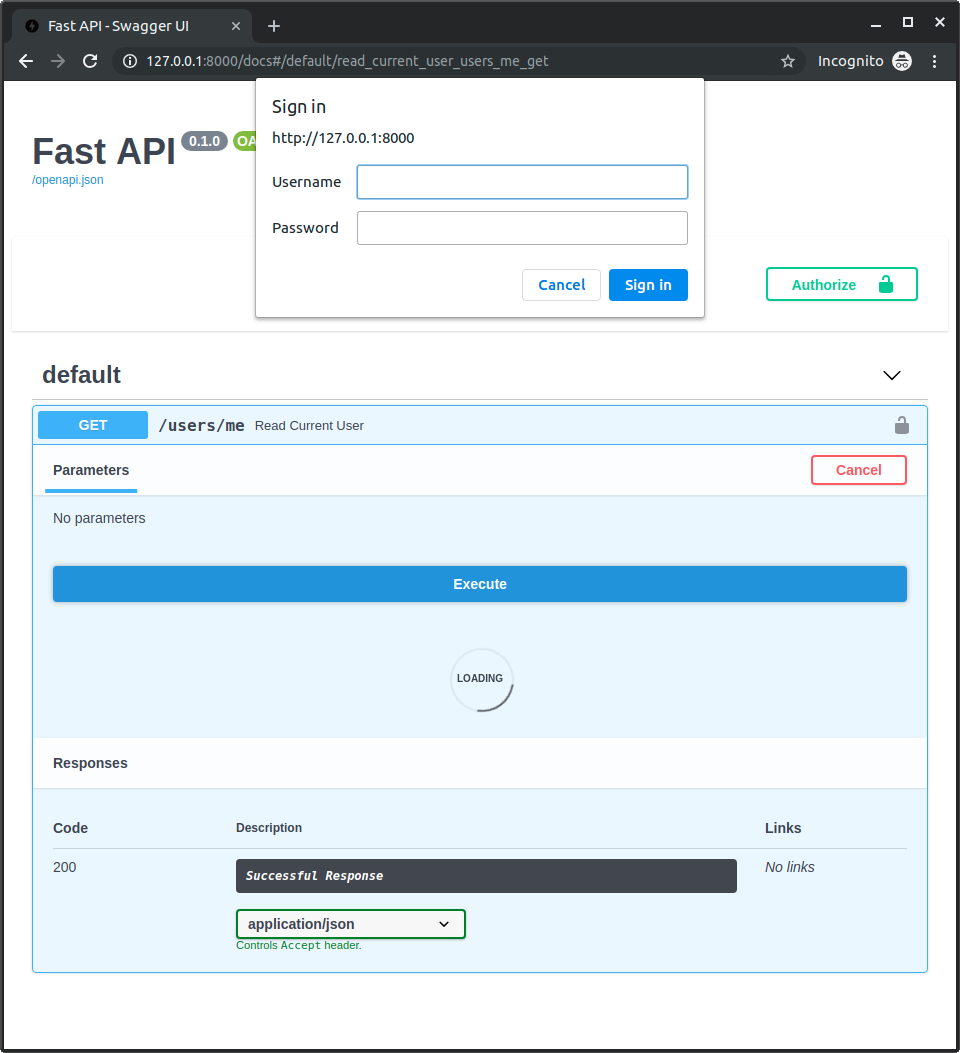
Коли ви спробуєте відкрити URL вперше (або натиснете кнопку «Execute» у документації), браузер попросить вас ввести ім'я користувача та пароль:
Перевірте ім'я користувача
Ось більш повний приклад.
Використайте залежність, щоб перевірити, чи правильні ім'я користувача та пароль.
Для цього використайте стандартний модуль Python secrets, щоб перевірити ім'я користувача та пароль.
secrets.compare_digest() повинен отримувати bytes або str, що містить лише ASCII-символи (англійські), це означає, що він не працюватиме з символами на кшталт á, як у Sebastián.
Щоб це обійти, ми спочатку перетворюємо username і password у bytes, кодувавши їх у UTF-8.
Потім ми можемо використати secrets.compare_digest(), щоб упевнитися, що credentials.username дорівнює "stanleyjobson", а credentials.password дорівнює "swordfish".
import secrets
from typing import Annotated

from fastapi import Depends, FastAPI, HTTPException, status
from fastapi.security import HTTPBasic, HTTPBasicCredentials

app = FastAPI()

security = HTTPBasic()


def get_current_username(
    credentials: Annotated[HTTPBasicCredentials, Depends(security)],
):
    current_username_bytes = credentials.username.encode("utf8")
    correct_username_bytes = b"stanleyjobson"
    is_correct_username = secrets.compare_digest(
        current_username_bytes, correct_username_bytes
    )
    current_password_bytes = credentials.password.encode("utf8")
    correct_password_bytes = b"swordfish"
    is_correct_password = secrets.compare_digest(
        current_password_bytes, correct_password_bytes
    )
    if not (is_correct_username and is_correct_password):
        raise HTTPException(
            status_code=status.HTTP_401_UNAUTHORIZED,
            detail="Incorrect username or password",
            headers={"WWW-Authenticate": "Basic"},
        )
    return credentials.username


@app.get("/users/me")
def read_current_user(username: Annotated[str, Depends(get_current_username)]):
    return {"username": username}
🤓 Other versions and variants
Tip
Prefer to use the Annotated version if possible.
import secrets

from fastapi import Depends, FastAPI, HTTPException, status
from fastapi.security import HTTPBasic, HTTPBasicCredentials

app = FastAPI()

security = HTTPBasic()


def get_current_username(credentials: HTTPBasicCredentials = Depends(security)):
    current_username_bytes = credentials.username.encode("utf8")
    correct_username_bytes = b"stanleyjobson"
    is_correct_username = secrets.compare_digest(
        current_username_bytes, correct_username_bytes
    )
    current_password_bytes = credentials.password.encode("utf8")
    correct_password_bytes = b"swordfish"
    is_correct_password = secrets.compare_digest(
        current_password_bytes, correct_password_bytes
    )
    if not (is_correct_username and is_correct_password):
        raise HTTPException(
            status_code=status.HTTP_401_UNAUTHORIZED,
            detail="Incorrect username or password",
            headers={"WWW-Authenticate": "Basic"},
        )
    return credentials.username


@app.get("/users/me")
def read_current_user(username: str = Depends(get_current_username)):
    return {"username": username}
Це було б подібно до:
if not (credentials.username == "stanleyjobson") or not (credentials.password == "swordfish"):
    # Поверніть якусь помилку
    ...
Але використовуючи secrets.compare_digest(), це буде захищено від типу атак, що називаються «атаки за часом» (timing attacks).
Атаки за часом
Що таке «атака за часом»?
Уявімо, що зловмисники намагаються вгадати ім'я користувача та пароль.
Вони надсилають запит з ім'ям користувача johndoe та паролем love123.
Тоді Python-код у вашому застосунку буде еквівалентний чомусь на кшталт:
if "johndoe" == "stanleyjobson" and "love123" == "swordfish":
    ...
Але в той момент, коли Python порівнює першу j у johndoe з першою s у stanleyjobson, він поверне False, тому що вже знає, що ці дві строки не однакові, «немає сенсу витрачати обчислення на порівняння решти літер». І ваш застосунок скаже «Невірні ім'я користувача або пароль».
А потім зловмисники спробують з ім'ям користувача stanleyjobsox і паролем love123.
І ваш код застосунку зробить щось на кшталт:
if "stanleyjobsox" == "stanleyjobson" and "love123" == "swordfish":
    ...
Python доведеться порівняти весь stanleyjobso у обох stanleyjobsox і stanleyjobson, перш ніж зрозуміти, що строки різні. Тому відповідь «Невірні ім'я користувача або пароль» займе на кілька мікросекунд довше.
Час відповіді допомагає зловмисникам
У цей момент, помітивши, що сервер витратив на кілька мікросекунд більше, щоб надіслати відповідь «Невірні ім'я користувача або пароль», зловмисники знатимуть, що вони щось вгадали, деякі початкові літери правильні.
І тоді вони можуть спробувати знову, знаючи, що це, ймовірно, щось більш схоже на stanleyjobsox, ніж на johndoe.
«Професійна» атака
Звісно, зловмисники не робитимуть усе це вручну, вони напишуть програму, можливо з тисячами або мільйонами перевірок за секунду. І вони отримуватимуть лише по одній правильній літері за раз.
Але так за кілька хвилин або годин зловмисники вгадають правильні ім'я користувача та пароль, «за допомогою» нашого застосунку, просто використовуючи час, потрібний для відповіді.
Виправте за допомогою secrets.compare_digest()
Але в нашому коді ми насправді використовуємо secrets.compare_digest().
Коротко, він витрачає однаковий час на порівняння stanleyjobsox зі stanleyjobson, як і на порівняння johndoe зі stanleyjobson. І так само для пароля.
Таким чином, використовуючи secrets.compare_digest() у коді вашого застосунку, він буде захищений від усього цього класу атак безпеки.
Поверніть помилку
Після виявлення, що облікові дані неправильні, поверніть HTTPException з кодом статусу 401 (такий самий повертається, коли облікові дані не надані) і додайте заголовок WWW-Authenticate, щоб браузер знову показав підсказку входу:
import secrets
from typing import Annotated

from fastapi import Depends, FastAPI, HTTPException, status
from fastapi.security import HTTPBasic, HTTPBasicCredentials

app = FastAPI()

security = HTTPBasic()


def get_current_username(
    credentials: Annotated[HTTPBasicCredentials, Depends(security)],
):
    current_username_bytes = credentials.username.encode("utf8")
    correct_username_bytes = b"stanleyjobson"
    is_correct_username = secrets.compare_digest(
        current_username_bytes, correct_username_bytes
    )
    current_password_bytes = credentials.password.encode("utf8")
    correct_password_bytes = b"swordfish"
    is_correct_password = secrets.compare_digest(
        current_password_bytes, correct_password_bytes
    )
    if not (is_correct_username and is_correct_password):
        raise HTTPException(
            status_code=status.HTTP_401_UNAUTHORIZED,
            detail="Incorrect username or password",
            headers={"WWW-Authenticate": "Basic"},
        )
    return credentials.username


@app.get("/users/me")
def read_current_user(username: Annotated[str, Depends(get_current_username)]):
    return {"username": username}
🤓 Other versions and variants
Tip
Prefer to use the Annotated version if possible.
import secrets

from fastapi import Depends, FastAPI, HTTPException, status
from fastapi.security import HTTPBasic, HTTPBasicCredentials

app = FastAPI()

security = HTTPBasic()


def get_current_username(credentials: HTTPBasicCredentials = Depends(security)):
    current_username_bytes = credentials.username.encode("utf8")
    correct_username_bytes = b"stanleyjobson"
    is_correct_username = secrets.compare_digest(
        current_username_bytes, correct_username_bytes
    )
    current_password_bytes = credentials.password.encode("utf8")
    correct_password_bytes = b"swordfish"
    is_correct_password = secrets.compare_digest(
        current_password_bytes, correct_password_bytes
    )
    if not (is_correct_username and is_correct_password):
        raise HTTPException(
            status_code=status.HTTP_401_UNAUTHORIZED,
            detail="Incorrect username or password",
            headers={"WWW-Authenticate": "Basic"},
        )
    return credentials.username


@app.get("/users/me")
def read_current_user(username: str = Depends(get_current_username)):
    return {"username": username}